
Renal anaemia
01Renal anaemia is a shortage of red blood cells caused by failing kidneys. Erythropoiesis stimulating agents and intravenous iron restore healthy blood counts.
- Erythropoietin (epoetin) injections
- Darbepoetin
- Iron sucrose
SM Distributors supplies dialysis centres, nephrology departments and kidney transplant units across Pakistan. Our range covers renal anaemia, bone health, transplant and dialysis unit medicines, delivered on a schedule that matches your sessions.
This page explains which nephrology medicines we supply, how we store them and how units order. Use it to plan supply for patients who rely on treatment several times a week.
Chronic kidney disease, or CKD, is a gradual loss of kidney function over months or years. Pakistani population studies have reported CKD in 12.5% to 29.9% of adults, according to a 2018 review in BMC Nephrology. Pakistan has no national renal registry, so exact national figures remain unknown.
Diabetes and high blood pressure drive most kidney failure worldwide. The IDF Diabetes Atlas 2025 ranks Pakistan first in the world for adult diabetes prevalence, at 31.4%. Rising diabetes means more Pakistani patients are likely to need dialysis and kidney medicines each year.
1 in 8
adults or more have CKD, across Pakistani population studies
31.4%
adult diabetes prevalence, the highest in the world (IDF 2025)
2 to 3
haemodialysis sessions a week for a typical patient
Most
patients on dialysis need anaemia treatment such as erythropoietin
Availability depends on manufacturer supply and DRAP registration. Ask our team for current stock, strengths and lead times.
Renal anaemia is a shortage of red blood cells caused by failing kidneys. Erythropoiesis stimulating agents and intravenous iron restore healthy blood counts.
Immunosuppressants are medicines that stop the immune system from rejecting a transplanted kidney. Patients take them every day for the life of the transplant.
CKD mineral and bone disorder upsets the balance of phosphate, calcium and parathyroid hormone. Left untreated, it weakens bones and stiffens blood vessels.
Every haemodialysis session relies on a core set of medicines. Units use them to prevent clotting in the circuit and replace lost nutrients.
High blood pressure both causes and worsens kidney disease. Antihypertensives and diuretics protect the kidney function that remains.
2 to 8 °C
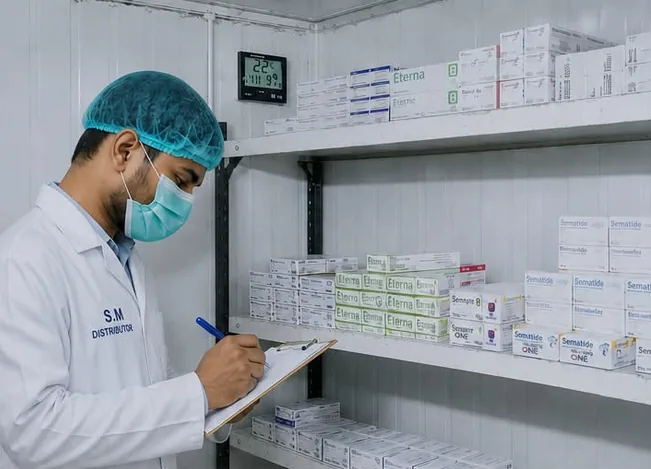
Monitored cold storage at our Karachi warehouse
DRAP's Guidelines for Good Cold Chain Management Practices, effective 3 May 2023, set the rules for storing temperature sensitive medicines in Pakistan. SM Distributors follows those rules for every nephrology order, from receipt in Karachi to delivery at your unit.
Erythropoietin and other biologics stay at 2 to 8 °C in monitored storage and travel in cold chain packing.
Dialysis runs on a fixed rhythm, so we schedule supply around your session volumes.
Our team orders immunosuppressants well ahead of need, because transplant patients cannot miss a dose.
Each delivery lists batch numbers and expiry dates for your pharmacy records.
| Medicine group | Typical storage | How we deliver |
|---|---|---|
| Erythropoietin & darbepoetin | Refrigerated at 2 to 8 °C, never frozen | Cold chain packing |
| Iron sucrose | Below 25 °C, never frozen | Documented standard delivery |
| Transplant immunosuppressants | Room temperature, as labelled | Scheduled ahead of need |
| Heparin | Room temperature, below 25 °C | Matched to session volumes |
Always follow the storage conditions on each product's label.
Licensed hospitals, clinics, pharmacies and treatment centres can order from us. Most orders follow four simple steps.
Share product names, strengths and quantities by phone, WhatsApp or email.
Our team confirms stock, price and lead time, and sources anything not on hand.
We check your order, pack it for its storage conditions and record every batch.
Your order reaches your pharmacy, in the cold chain wherever the product needs it.
Have a question this page does not answer? Our team replies during office hours, Mon–Sat, 9 am – 6 pm.
Ask a questionDialysis centres buy nephrology medicines through licensed distributors such as SM Distributors. We supply erythropoietin, IV iron, phosphate binders, heparin and transplant medicines nationwide. Share your monthly session volume and we schedule deliveries to match.
Yes, erythropoietin always travels at 2 to 8 °C. Erythropoietin loses potency if it freezes or warms, so our team packs it with temperature control. It stays in our monitored cold room until dispatch.
Most dialysis patients need anaemia, bone and blood pressure medicines alongside dialysis itself. Common examples include erythropoietin, iron sucrose, phosphate binders and vitamin D analogues. Each patient's nephrologist sets the exact regimen.
Yes, we supply registered tacrolimus, mycophenolate and ciclosporin. Transplant patients cannot miss doses, so our team orders well ahead of need. Units can set up a standing order for predictable monthly supply.
Yes, send us the product name, strength and quantity. Our import and procurement department works with more than 50 partner manufacturers. The team confirms availability and lead time before you commit.
Yes, we deliver across Pakistan from our Karachi warehouse. Hospitals and centres in Lahore, Islamabad, Rawalpindi, Multan, Faisalabad, Peshawar, Quetta and Hyderabad order from us. Refrigerated items travel in cold chain packing to every city.
SM Distributors supplies institutions only, under our wholesale drug licence. Hospitals, clinics, pharmacies and treatment centres can open an account with us. Patients should buy through their hospital pharmacy or a licensed retail pharmacy.
Dependable nephrology supply keeps dialysis sessions running and protects every transplanted kidney. SM Distributors schedules deliveries around your sessions, ships erythropoietin in the cold chain and documents every batch across Pakistan.
Send your nephrology product list to SM Distributors today. Call 021-36613722, email info@smdistributors.com or use our enquiry form to request availability.